
Skip to content Skip to footer

When Waterford Declared St. Patrick’s Day a ‘National Holiday’

Two people in festive outfits with yellow headpieces and colourful handprints on their shirts smile and dance together during an outdoor parade, celebrating Demilitarising Saint Patrick’s Day 1921 among other joyful participants and onlookers.

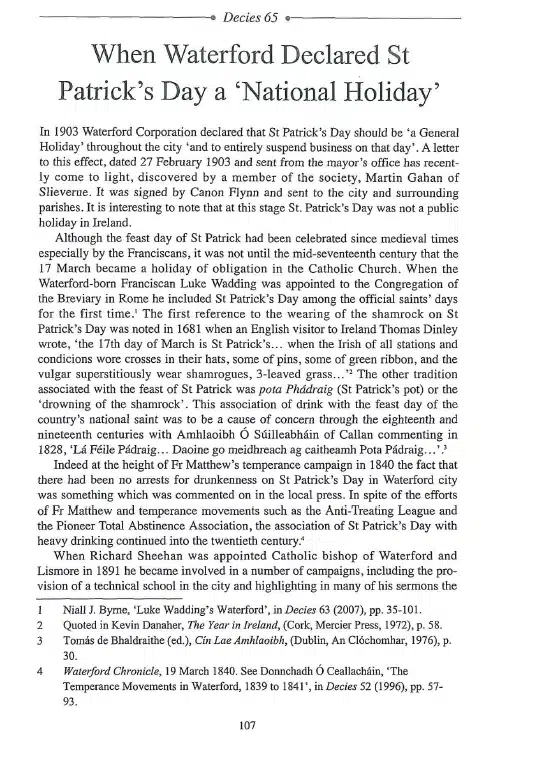
In 1903, Waterford made history by helping to shape how Ireland celebrates its patron saint, when St Patrick’s Day was officially declared a national holiday under the Bank Holiday (Ireland) Act. The announcement was made right here in Waterford, cementing the city’s place at the heart of Ireland’s cultural story. At a time when St Patrick’s Day was marked more by religious observance than public celebration, this decision paved the way for the vibrant parades, festivals, and community gatherings we know today. More than a date on the calendar, it was a bold statement of national identity—and one that continues to echo through Waterford’s streets every March as the city comes alive for St Patrick’s Festival.
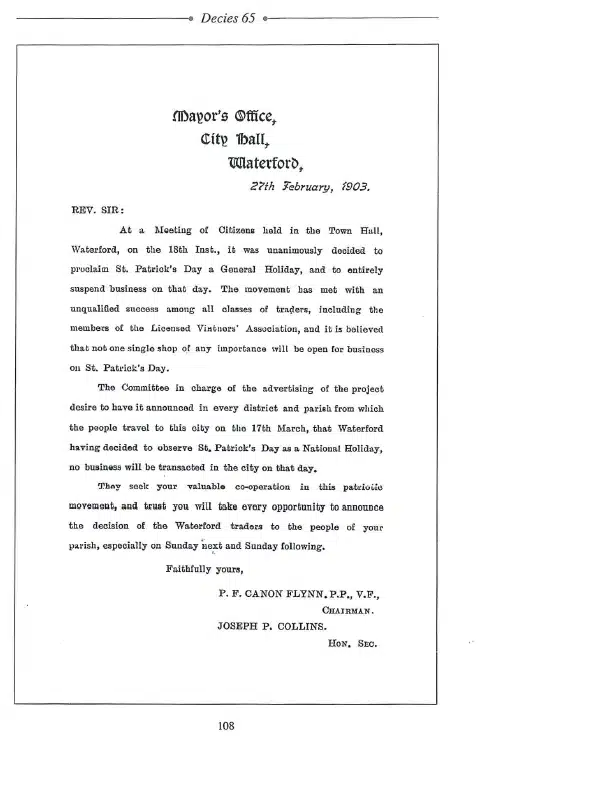
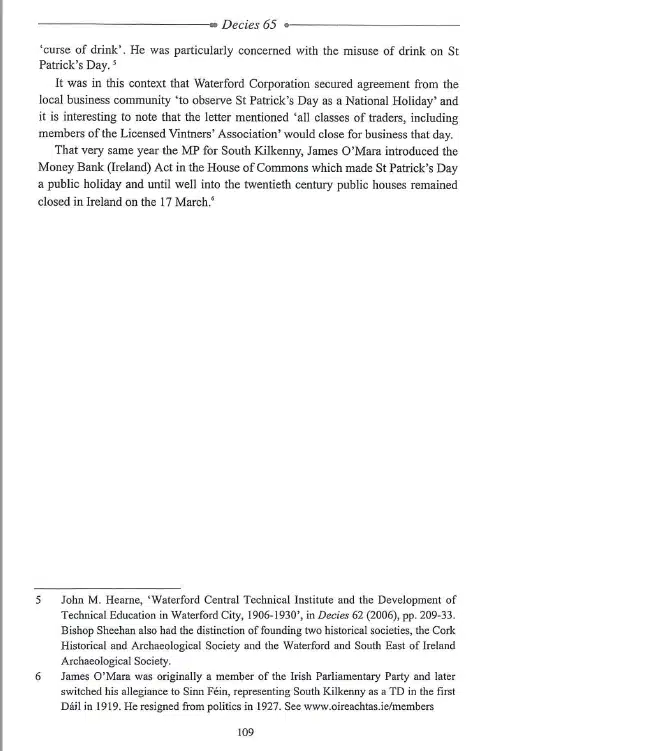
A letter from the Mayor’s Office, City Hall, Waterford, dated 27th February 1903, discusses making Waterford St Patrick’s Day a national holiday and limiting business activity. The letter is signed by P.F. Canon Flynn and Joseph P. Collins.
A book page titled “When Waterford St Patrick’s Day Became a National Holiday,” featuring historical text in two columns about the 1903 declaration and related references at the bottom of the page.
A page from a book or journal discusses the observance of St Patrick's Day as a national holiday in Ireland, highlighting celebrations in places like Waterford. The lower part of the page contains five numbered footnotes with references.